
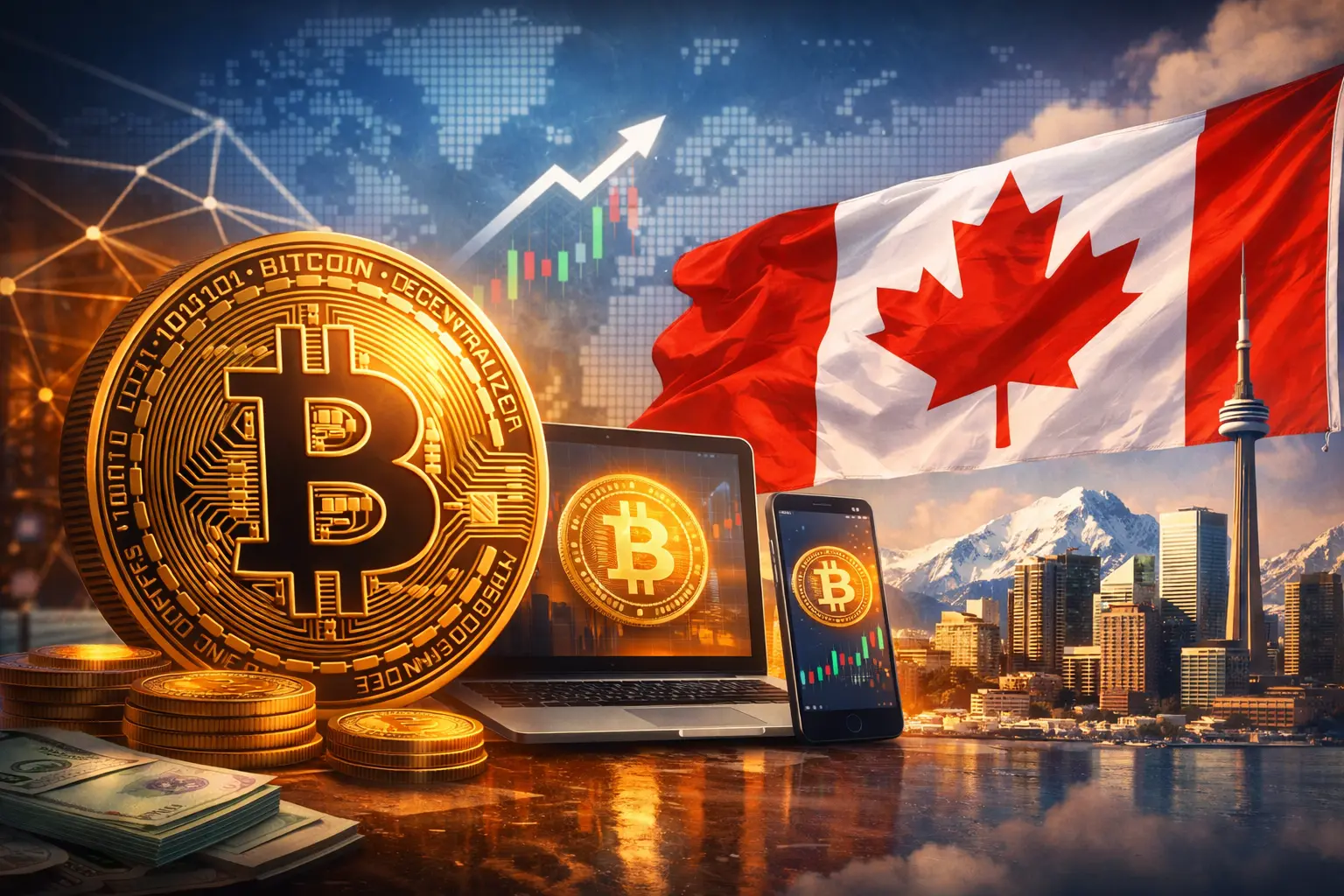
Introduction: Understanding Bitcoin and Its Global Impact
Bitcoin, the world’s first decentralized cryptocurrency, has revolutionized the way people think about money, finance, and investment. Launched in 2009 by an anonymous entity known as Satoshi Nakamoto, Bitcoin operates without a central authority, enabling peer-to-peer transactions on a blockchain network. Over the years, Bitcoin has gained significant popularity as both a store of value and a medium of exchange.
In Canada, Bitcoin has been increasingly recognized not only for its potential as an investment vehicle but also for its role in modernizing the financial ecosystem. With a progressive regulatory framework, the Canadian government has supported Bitcoin’s development, making it one of the most promising markets in the world for cryptocurrency adoption.
Latest posts
Bitcoin
View all
Bitcoin ETF Gravity & Macro Pressure: Latest Bitcoin Market Update
Price Action: Bitcoin Under Pressure Bitcoin has faced renewed selling pressure in recent days, with prices dropping below $90,000 after a brief…

Bitcoin Price Slides Below $90K Amid Market Turbulence
Bitcoin has dipped below the $90,000 level this week, reflecting heightened volatility across global markets and cautious investor sentiment. Data shows significant…
The Growing Relevance of Bitcoin in Canada
Bitcoin as a Digital Asset
Bitcoin’s appeal in Canada can be traced back to its decentralized nature and its ability to function outside the traditional banking system. In recent years, Canadians have shown a growing interest in Bitcoin as a way to diversify their investment portfolios, especially in light of inflation and economic uncertainty.
Bitcoin as a Payment Method in Canada
As more Canadian businesses begin accepting Bitcoin, the currency’s use case is expanding. From tech startups to established enterprises, Canadian companies are embracing Bitcoin as a legitimate payment method, providing consumers with more flexibility in how they engage with goods and services.
The Canadian Bitcoin Community
Canada has a vibrant and diverse Bitcoin community, with cities like Toronto and Vancouver hosting crypto meetups, conferences, and workshops. This community helps educate and engage both newcomers and seasoned crypto investors, fostering a culture of innovation around Bitcoin.
Key Bitcoin Market Trends in Canada
1. Bitcoin ETFs and Institutional Adoption
Bitcoin exchange-traded funds (ETFs) were launched in Canada, providing a more accessible way for institutional investors and retail traders to gain exposure to Bitcoin. This has opened the door for broader adoption of Bitcoin in mainstream investment portfolios.
2. Increasing Acceptance by Canadian Businesses
More Canadian merchants, including both large retailers and small businesses, are accepting Bitcoin as payment. This reflects a growing trend towards using Bitcoin not only as a speculative asset but as a functional currency in daily transactions.
3. Bitcoin Mining in Canada
Canada’s abundance of renewable energy, particularly in Quebec, has made it a hotspot for Bitcoin mining. While this has led to some debate about Bitcoin’s environmental impact, it also positions Canada as a leader in sustainable Bitcoin mining.
The Regulatory Landscape for Bitcoin in Canada
Canada has taken a proactive stance on cryptocurrency regulation, aiming to foster innovation while protecting consumers and investors. The country’s regulatory framework for Bitcoin has made it easier for investors to engage with the asset while ensuring compliance with anti-money laundering (AML) and know-your-customer (KYC) regulations.
1. Taxation of Bitcoin in Canada
Bitcoin is classified as a commodity by the Canada Revenue Agency (CRA), which means that capital gains taxes apply when it is sold for a profit. Additionally, any income earned from Bitcoin mining or trading may be subject to income tax.
2. Regulation of Crypto Exchanges
Canadian crypto exchanges are required to register as money services businesses (MSBs) with the Financial Transactions and Reports Analysis Centre of Canada (FINTRAC). This regulation ensures that exchanges comply with AML and KYC standards, providing a secure environment for users.
3. Future Regulatory Developments
As Bitcoin continues to grow in popularity, Canada’s regulatory approach is likely to evolve. Potential future regulations could focus on addressing concerns around consumer protection, Bitcoin’s environmental impact, and the integration of cryptocurrencies into the broader financial system.
Security and Risks of Bitcoin: What You Need to Know
1. Bitcoin Security Concerns
While Bitcoin transactions are secure, they are irreversible. Once a transaction is confirmed, it cannot be undone. This makes it essential for users to take precautions to secure their Bitcoin holdings. Use of hardware wallets, multi-signature authentication, and two-factor authentication can enhance security.
2. Risks of Bitcoin Investment
Bitcoin is known for its price volatility, which means that it can experience significant fluctuations in value over short periods. As a result, investing in Bitcoin carries risks, and it is important for investors to be prepared for potential losses. It is recommended that Bitcoin be considered as part of a diversified investment portfolio.
3. Scams and Fraud Prevention
The rise of Bitcoin has unfortunately led to an increase in cryptocurrency scams and fraudulent schemes. Investors should be cautious of Ponzi schemes, fake ICOs (Initial Coin Offerings), and phishing attacks. Always use reputable exchanges and wallets to minimize risks.
Practical Guide: How to Get Started with Bitcoin in Canada
1. Buying Bitcoin in Canada
There are several ways to buy Bitcoin in Canada, including through cryptocurrency exchanges such as Kraken, Binance, and CoinSquare. You can use Canadian dollars (CAD) to purchase Bitcoin, making the process seamless for local residents.
2. Storing Your Bitcoin
After purchasing Bitcoin, it is important to store it securely. The two primary methods of storing Bitcoin are through hot wallets (software wallets connected to the internet) and cold wallets (offline hardware wallets). Cold wallets are considered more secure due to their resistance to hacking.
3. Trading Bitcoin
Trading Bitcoin allows you to profit from the volatility of its price. Popular Canadian exchanges like Bitbuy and NDAX offer platforms for trading Bitcoin. Users can buy and sell Bitcoin based on market trends or use advanced tools for technical analysis.
4. Using Bitcoin for Payments
While not all businesses in Canada accept Bitcoin, the number of those that do is increasing. You can use Bitcoin to pay for products or services with companies that accept it directly or through payment gateways like BitPay.
Frequently Asked Questions (FAQ) About Bitcoin in Canada
1. How do I buy Bitcoin in Canada?
You can buy Bitcoin in Canada through cryptocurrency exchanges like CoinSquare, Kraken, or Binance, which allow you to purchase Bitcoin using Canadian dollars.
2. Is Bitcoin legal in Canada?
Yes, Bitcoin is legal in Canada. The Canadian government regulates Bitcoin exchanges and treats it as a commodity for tax purposes.
3. What is the future of Bitcoin in Canada?
The future of Bitcoin in Canada looks promising, with increasing adoption by businesses and investors, as well as a supportive regulatory environment. As the cryptocurrency ecosystem grows, Bitcoin is likely to become an even more integral part of the Canadian financial landscape.
4. What are the risks of investing in Bitcoin?
The main risks of investing in Bitcoin include its price volatility, the potential for theft or hacking if proper security measures aren’t taken, and regulatory uncertainty. Investors should be aware of these risks and take steps to mitigate them.
5. How do I store my Bitcoin safely?
You can store Bitcoin safely in a hardware wallet, which is an offline device that protects your private keys. Additionally, software wallets with strong encryption and multi-signature features can enhance security.